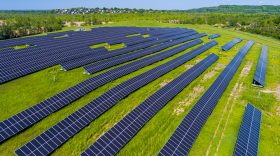
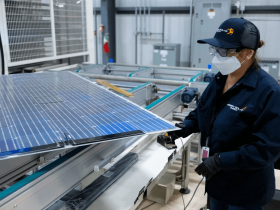
Thin film solar is made by coating a sheet of glass or steel with a very thin layer of a light-absorbing substrate. The most common materials used are amorphous silicon, cadmium telluride, copper indium, and diselenide. Although sometimes referred to as panels or cells, thin film technology is not made from crystalline wafers and is thus neither.
Performance
Thin film solar has an electricity return rate of about 9-13%, which means it requires more roof space to generate the same amount of electricity when compared to crystalline modules. But thin film, as the name implies, is the thinnest and more flexible solar technology on the market today. These characteristics allow thin film solar to be used on a wider variety of surfaces, such as roof tiles, and other surfaces that need not be flat.

Photo Credit: US Tile
Cost and Durability
Because much less of the light-absorbent material is required, thin film solar is much cheaper than crystalline silicon panels. And while less efficient than a crystalline panel, thin film solar technology is significantly less expensive. As the technology is relatively new, there is no consensus on the average lifespan of thin film panels. Currently, manufacturer’s warranties range from 3 to 20 years.
Photovoltaic solar shingles, also called solar roof tiles, are a more aesthetically pleasing alternative to PV solar panels.
Solar Shingles
Solar shingles are an offshoot of thin-film technology, made by depositing a very thin layer of absorbent substrate onto flexible stainless steel.

A roofer installing DOW Solar Shingles. Photo Credit: Inhabitat
Solar powered shingles are usually 12 by 86 inches, and are a dark blue-purple color. The primary benefit of a solar roof tile is that it is designed to look like traditional a roof tile, making it less noticeable than a traditional PV panel.
Performance
Solar power shingles currently have an efficiency of 10%, making them the least efficient type of solar panel. However, some homeowners prefer to take up more roof space (to generate the same amount of electricity as traditional PV panels) because of the more pleasing appearance.
Like traditional solar panels, solar shingles do require other balance of system components such as an inverter and a meter to be able to take advantage of net metering.
Cost and Durability
The durability of solar shingles is similar to conventional panels, with the most popular type of commercially available solar shingle having a warranty of 20 years.
Solar shingles generally take less time to install, at about 10 hours rather than 20-30 hours for regular PV panels. And because most types of shingles can be stapled directly to the roofing cloth and can sometimes even be installed by a regular roofer.
However, because the technology is relatively new, the actual production cost of solar shingles is higher than for traditional PV panels. So on the whole, solar shingles cost more than traditional PV panels, and are really only designed to provide 40-80% of a home’s electricity.
Compare thin film against monocrystalline and polycrystalline solar cells.